NEW ORLEANS — Elyse Stevens had a status for taking over complicated medical instances. Individuals who’d been battling habit for many years. Persistent-pain sufferers on excessive doses of opioids. Intercourse employees and folks dwelling on the road.
“Lots of my sufferers are messy, those that don’t know in the event that they need to cease utilizing medicine or not,” stated Stevens, a main care and habit drugs physician.
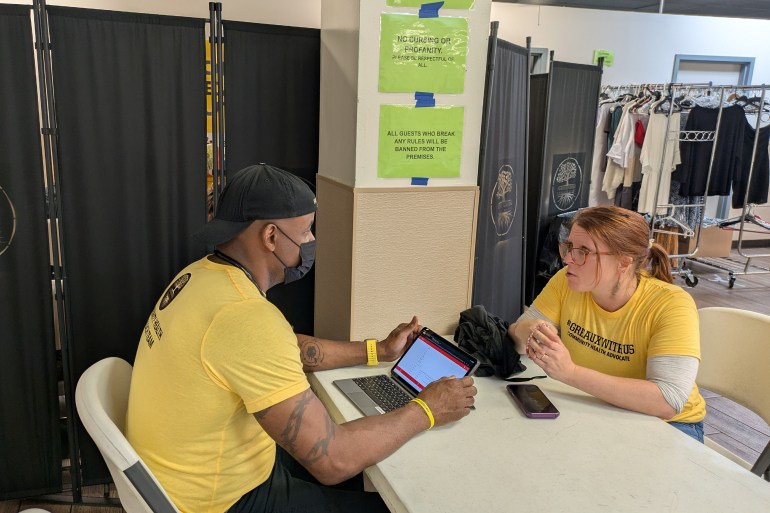
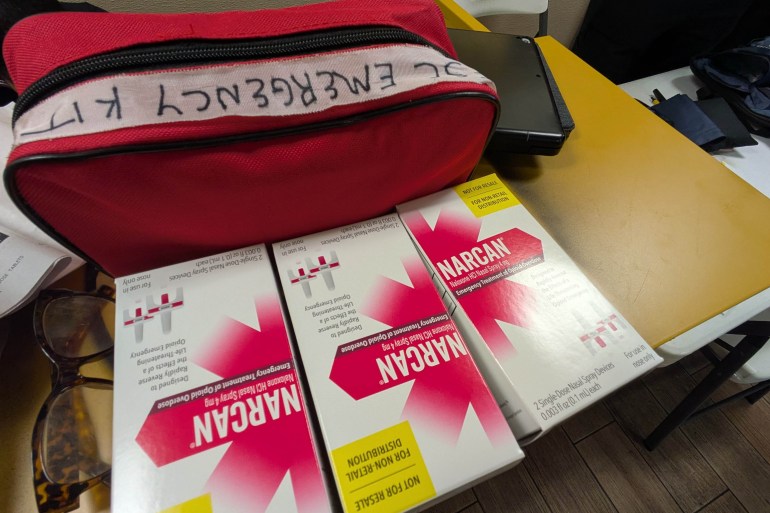
Whereas different medical doctors averted these sufferers, Stevens — who was conversant in town from her time in medical college at Tulane College — sought them out. She often attended 6 a.m. breakfasts for homeless folks, volunteered at a homeless shelter clinic on Saturdays, and, on Monday evenings, visited an deserted Household Greenback retailer the place advocates distributed provides to individuals who use medicine.
One such night about 4 years in the past, Charmyra Harrell arrived there limping, her proper leg swollen and coated in sores. Emergency room medical doctors had repeatedly dismissed her, so she eased the ache with road medicine, Harrell stated.
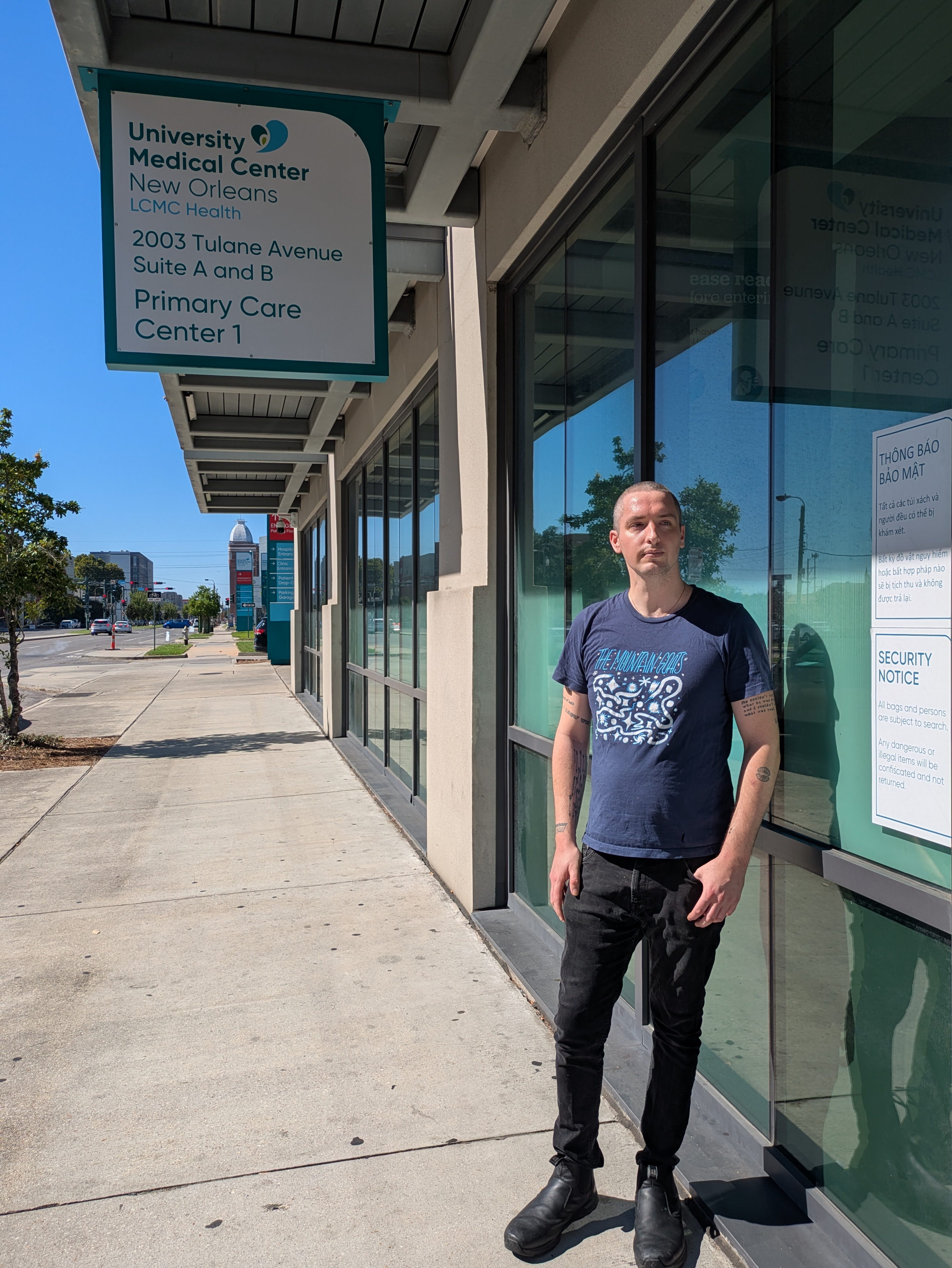
Stevens cleaned her sores on Mondays for months till lastly persuading Harrell to go to the clinic at College Medical Heart New Orleans. There, Stevens found Harrell had diabetes and most cancers.
She agreed to prescribe Harrell ache treatment — an choice many medical doctors would mechanically dismiss for concern {that a} affected person with a historical past of habit would misuse it.
However Stevens was assured Harrell might maintain up her finish of the deal.
“She advised me, ‘You can not do medicine and do your ache meds,’” Harrell recounted on a Monday night in October. So, “I’m now not on cocaine.”


Stevens’ strategy to affected person care has received her awards and nominations in medicine, community service, and humanism. As a substitute of seeing sufferers in binaries — addicted or sober, with a optimistic or unfavourable drug check — she measures progress on a spectrum. Are they showering every day, cooking with their households, utilizing much less fentanyl than the day earlier than?
However not everybody agrees with this versatile strategy that prioritizes working with sufferers on their objectives, even when abstinence isn’t one in all them. And it got here to a head in the summertime of 2024.
“The identical issues I used to be high-fived for 1000’s of instances — immediately that was unhealthy,” Stevens stated.
Versatile Care or Slippery Slope?
Greater than 80% of Americans who want substance use remedy don’t obtain it, nationwide information reveals. Obstacles abound: excessive prices, lack of transportation, clinic hours which can be incompatible with jobs, concern of being mistreated.
Some medical doctors had been attempting to ease the method for years. Covid-19 accelerated that pattern. Telehealth appointments, fewer urine drug exams, and drugs refills that last more turned the norm.
The consequence?
“Sufferers did OK and we really reached extra folks,” stated Brian Hurley, instant previous president of the American Society of Habit Drugs. The group helps persevering with versatile practices, akin to serving to sufferers keep away from withdrawal signs by prescribing higher-than-traditional doses of habit treatment and specializing in restoration objectives other than abstinence.
However some medical doctors want conventional approaches that vary from zero tolerance for sufferers utilizing unlawful medicine to setting stiff penalties for individuals who don’t meet their medical doctors’ expectations. For instance, a affected person who exams optimistic for road medicine whereas getting outpatient care could be discharged and advised to go to residential rehab. Proponents of this technique concern loosening restrictions might be a slippery slope that in the end harms sufferers. They are saying persevering with to prescribe painkillers, for instance, to folks utilizing illicit substances long-term might normalize drug use and hamper the aim of getting folks off unlawful medicine.
Progress ought to be greater than maintaining sufferers in care, stated Keith Humphreys, a Stanford psychologist, who has handled and researched habit for many years and supports involuntary treatment.
“When you give addicted folks a number of medicine, they prefer it, and so they might come again,” he stated. “However that doesn’t imply that that’s selling their well being over time.”
Versatile practices additionally are likely to align with hurt discount, a divisive strategy that proponents say retains individuals who use medicine protected and that critics — including the Trump administration — say permits unlawful drug use.
The talk isn’t just philosophical. For Stevens and her sufferers, it got here to bear on the streets of New Orleans.
‘Unconventional’ Prescribing
In the summertime of 2024, supervisors began questioning Stevens’ strategy.
In emails reviewed by KFF Well being Information, they expressed considerations about her prescribing too many ache capsules, a mixture of opioids and different managed substances to the identical sufferers, and excessive doses of buprenorphine, a drugs thought-about the gold standard to deal with opioid habit.
Supervisors nervous Stevens wasn’t doing sufficient urine drug exams and stored treating sufferers who used illicit medicine as a substitute of referring them to larger ranges of care.
“Her prescribing sample seems unconventional in comparison with the native commonplace of care,” the hospital’s chief medical officer on the time wrote to Stevens’ supervisor, Benjamin Springgate. “Be aware that that is the one commonplace of care which might seemingly be thought-about ought to a authorized concern come up.”
Springgate forwarded that electronic mail to Stevens and inspired her to refer extra sufferers to methadone clinics, intensive outpatient care, and inpatient rehab.
Stevens understood the final follow however couldn’t reconcile it with the fact her sufferers confronted. How would somebody dwelling in a tent, petrified of shedding their possessions, trek to a methadone clinic every day?
Stevens despatched her supervisors dozens of research studies and national treatment guidelines backing her versatile strategy. She defined that if she stopped prescribing the drugs of concern, sufferers may go away the well being system, however they wouldn’t disappear.
“They only wouldn’t be getting care and maybe they’d be useless,” she stated in an interview with KFF Well being Information.

Each College Medical Heart and LSU Well being New Orleans, which employs physicians on the hospital, declined repeated requests for interviews. They didn’t reply to detailed questions on habit remedy or Stevens’ practices.
As a substitute, they offered a joint assertion from Richard DiCarlo, dean of the LSU Well being New Orleans Faculty of Drugs, and Jeffrey Elder, chief medical officer of College Medical Heart New Orleans.
“We’re not at liberty to remark publicly on inner personnel points,” they wrote.
“We acknowledge that habit is a severe public well being downside, and that habit remedy is a problem for the healthcare business,” they stated. “We stay devoted to increasing entry to remedy, whereas upholding the very best commonplace of care and security for all sufferers.”
Not Black-and-White
KFF Well being Information shared the complaints in opposition to Stevens and the responses she’d written for supervisors with two habit drugs medical doctors outdoors of Louisiana, who had no affiliation with Stevens. Each discovered her practices to be throughout the bounds of regular habit care, particularly for complicated sufferers.
Stephen Loyd, an habit drugs physician and the president of Tennessee’s medical licensing board, stated medical doctors operating tablet mills usually have sparse affected person notes that listing a chief criticism of ache. However Stevens’ notes detailed sufferers’ life circumstances and the intricate choices she was making with them.
“To me, that’s the large distinction,” Loyd stated.
Some folks assume the “solely good reply is not any opioids,” akin to oxycodone or hydrocodone, for any sufferers, stated Cara Poland, an habit drugs physician and affiliate professor at Michigan State College. However sufferers may have them — typically for issues like most cancers ache — or require months to decrease their doses safely, she stated. “It’s not as black-and-white as folks outdoors our discipline need it to be.”
Humphreys, the Stanford psychologist, had a distinct take. He didn’t overview Stevens’ case however stated, as a common follow, there are dangers to prescribing painkillers long-term, particularly for sufferers utilizing immediately’s deadly road medicine too.
Overprescribing fueled the opioid disaster, he stated. “It’s not going to go away if we do this once more.”
‘The Factor That Kills Folks’
After months of pressure, Stevens’ supervisors advised her on March 10 to cease coming to work. The hospital was conducting a overview of her practices, they stated in an electronic mail seen by KFF Well being Information.
In a single day, a whole bunch of her sufferers had been moved to different suppliers.
Luka Bair had been seeing Stevens for 3 years and was secure on every day buprenorphine.
After Stevens’ departure, Bair was left with out treatment for 3 days. The withdrawal signs had been extreme — headache, nausea, muscle cramps.
“I used to be simply in bodily hell,” stated Bair, who works for the Nationwide Hurt Discount Coalition and makes use of they/them pronouns.
Though Bair ultimately received a refill, Springgate, Stevens’ supervisor, didn’t need to proceed the routine long-term. As a substitute, Springgate referred Bair to extra intensive and residential packages, citing Bair’s intermittent use of different medicine, together with benzodiazepines and cocaine, as markers of excessive danger. Bair “requires a better degree of care than our clinic fairly can supply,” Springgate wrote in affected person portal notes reviewed by KFF Well being Information.
However Bair stated every day attendance at these packages was incompatible with their full-time job. They left the clinic, with 30 days to discover a new physician or run out of treatment once more.
“That is the factor that kills folks,” stated Bair, who ultimately discovered one other physician prepared to prescribe.
Springgate didn’t reply to repeated calls and emails requesting remark.
College Medical Heart and LSU Well being New Orleans didn’t reply questions on discharging Stevens’ sufferers.
‘Reckless Habits’
A couple of month after Stevens was advised to remain dwelling, Haley Beavers Khoury, a medical scholar who labored together with her, had collected practically 100 letters from different college students, medical doctors, sufferers, and homelessness service suppliers calling for Stevens’ return.
One scholar wrote, “Make no mistake — a few of her sufferers will die with out her.” A nun from the Daughters of Charity, which ran the hospital’s previous incarnation, referred to as Stevens a “lifeline” for susceptible sufferers.
Beavers Khoury stated she despatched the letters to about 10 folks in hospital and medical college management. Most didn’t reply.
In Might, the hospital’s overview committee decided Stevens’ practices fell “outdoors of the suitable group requirements” and constituted “reckless habits,” in keeping with a letter despatched to Stevens.
The hospital didn’t reply KFF Well being Information’ questions on the way it reached this conclusion or if it recognized any affected person hurt.
In the meantime, Stevens had secured a job at one other New Orleans hospital. However as a result of her resignation got here amid the continuing investigation, College Medical Heart stated it was required to tell the state’s medical licensing board.
The medical board started its personal investigation — a growth that ultimately value Stevens the opposite job supply.
In presenting her facet to the medical board, Stevens repeated many arguments she’d made earlier than. Sure, she was prescribing highly effective drugs. No, she wasn’t making medical choices based mostly on urine drug exams. However nationwide habit organizations supported such practices and promoted tailoring care to sufferers’ circumstances, she stated. Her response included a 10-page bibliography with 98 citations.
Legal responsibility
The board’s investigation into Stevens is ongoing. Its website reveals no motion taken in opposition to her license as of late December.
The board declined to touch upon each Stevens’ case and its definition of acceptable habit remedy.
In October, Stevens moved to the Virgin Islands to work in inner drugs at a neighborhood hospital. She stated she’s grateful for the welcoming locals and the monetary stability to assist herself and her mother and father.
But it surely hurts to think about her former sufferers in New Orleans.
Earlier than leaving, Stevens packed away handwritten letters from a number of of them — one was 15 pages lengthy, written in alternating inexperienced and purple marker — through which they shared childhood traumas and small successes that they had whereas in remedy together with her.
Stevens doesn’t know what occurred to these sufferers after she left.
She believes the scrutiny of her practices facilities on legal responsibility greater than affected person security.
However, she stated, “legal responsibility is in abandoning folks too.”