Should you’ve ever began a exercise and felt your final meal bouncing round in your intestine, you already know the issue.
The annoying half is the web provides you two ineffective choices:
- “You should at all times go away a number of hours between consuming and coaching.”
- “Timing doesn’t matter in any respect.”
Each are incorrect.
You don’t want difficult guidelines, and also you don’t have to guess. You want a easy baseline (so you can also make a name in 10 seconds) and some clear changes for the conditions that truly journey folks up—like heavy meals, high-fat meals, and intense coaching periods.
That’s what this text provides you.
Key Takeaways
- There isn’t one “proper” wait time after consuming—use a easy baseline, then modify primarily based on meal measurement, what you ate, and exercise depth.
- A very good rule of thumb is 30–60 minutes after a snack, 1–2 hours after a small meal, and a couple of–4 hours after a giant meal.
- Meal measurement is the largest lever: even a modest meal can nonetheless be digesting an hour later.
- What you eat issues: fiber, fats, and protein have a tendency to take a seat heavier; very concentrated carb drinks and easy sugar can even trigger points.
- Intense or “bouncy” coaching (HIIT, plyometrics, sports activities) is extra more likely to upset your abdomen than low-intensity lifting or mild cardio, so that you typically want extra time.
How Lengthy Ought to You Wait to Work Out After Consuming?
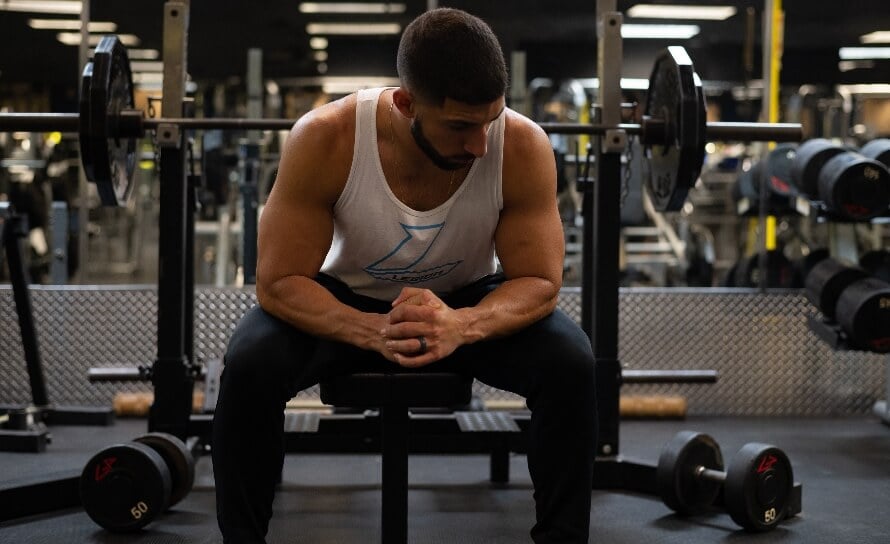
There isn’t one “proper” time to attend to work out after consuming, however a heuristic that works for most individuals is wait . . .
- 30–60 minutes after a light-weight snack
- 1–2 hours after a small meal
- 2–4 hours after a giant meal
Then modify these instances up or down primarily based on how your abdomen feels, what you ate, and the way arduous you’re about to coach.
Right here’s find out how to make these adjustments.
What Modifications How Lengthy You Ought to Wait?
The above guidelines of thumb work as a result of they’re a shortcut for one factor: how briskly your abdomen empties.
And that relies upon totally on three variables:
- Meal measurement (how a lot you ate)
- Macronutrient composition (what you ate)
- Exercise intensity and kind (what you’re about to do)
Let’s begin with the largest lever.
Meal Measurement
Meal measurement issues as a result of your abdomen can solely transfer meals into your small gut so quick. The extra you place in it, the longer it often takes to filter sufficient that you simply really feel good coaching.
In a single study, researchers gave folks a small meal of rice and egg and tracked how lengthy it took for folks’s stomachs to empty. Even with that modest meal, most individuals’s stomachs had been solely about midway “emptied” after an hour—and the vary between folks was enormous.
In different phrases, one individual can eat a small meal and prepare 60 minutes later with no drawback, whereas one other feels depressing doing the identical factor and wishes extra time.
So while you’re deciding how lengthy to attend, meal measurement is your first filter: snacks take 30–60 minutes, small meals want extra time, and massive meals usually require a pair hours (or extra)—then modify primarily based on how you are feeling.
Macronutrient Composition
Two meals may be the identical measurement and nonetheless really feel completely totally different in your abdomen, as a result of what you ate can change how briskly it empties—and the way doubtless it’s to trigger GI drama when you begin shifting.
For instance, research exhibits that sure meals are typically extra troublesome round exercises like these excessive in fiber, fat, protein, and fructose.
Studies additionally counsel that extremely concentrated carb drinks can pose an issue as a result of they could sluggish abdomen emptying and pull fluid into the intestine.
And research exhibits that pounding giant doses of a easy sugar (like glucose) can backfire for comparable causes—slower emptying, extra bloating—particularly at increased intakes.
Exercise Depth and Sort
Exercise depth is the “multiplier” that turns a meal that feels effective at relaxation right into a meal that feels horrible when you begin coaching.
That’s as a result of arduous train could make your intestine much less comfortable in two large methods: it will possibly cut back blood stream to the intestines, and it will possibly sluggish abdomen emptying—each of which increase the chances of nausea, cramping, reflux, and that feeling of “meals sloshing round” in your intestine
For instance, research exhibits that in train—particularly while you’re even a bit dehydrated—blood stream to the intestine drops, which scientists believe contributes to GI signs. And studies present intermittent, stop-and-go train can sluggish abdomen emptying of fluids by about half.
So the more durable (and extra “bouncy”) the session, the extra conservative you need to be with timing—and the extra vital it’s that what you ate sits properly for you.
What Occurs If You Work Out Too Quickly After Consuming?
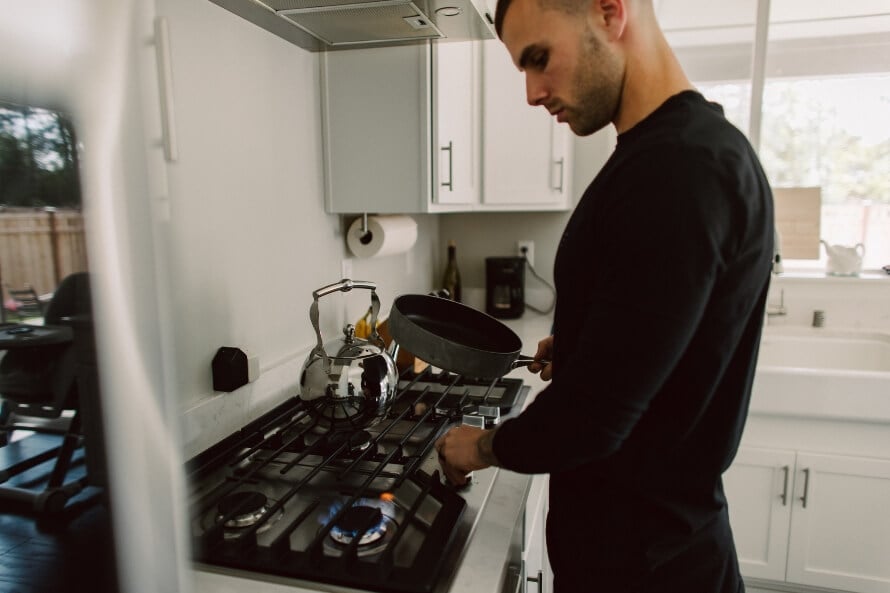
Normally, nothing catastrophic occurs while you work out too quickly after consuming—you simply really feel much less snug than while you give meals time to digest.
That mentioned, research shows figuring out too quickly after consuming generally causes signs like:
- Reflux and heartburn
- Bloating, belching, and flatulence
- Sew, cramps, and abdomen ache
- Nausea and vomiting
- Diarrhea or an urge to make use of the toilet
The Backside Line on How Lengthy Ought to You Wait to Exercise After Consuming
There’s no single “excellent” period of time to attend to work out after consuming, however most individuals do finest with a easy rule: wait 30–60 minutes after a snack, 1–2 hours after a small meal, and a couple of–4 hours after a giant meal—then modify primarily based on how you are feeling.
Intense, bouncy workouts and heavier, slower-digesting meals often imply ready longer; lighter coaching and easier meals typically imply you may go sooner.
FAQ #1: What occurs if I exercise after consuming?
Normally, nothing “harmful” occurs—you simply get uncomfortable. The commonest points are signs like nausea, reflux, heartburn, bloating, and belching. More often than not, the repair is straightforward: wait a bit longer subsequent time, or eat one thing lighter.
FAQ #2: Are you able to exercise one hour after consuming?
Generally, sure—nevertheless it is dependent upon the meal and the exercise. Research on abdomen emptying present that even a modest meal may be solely about “half emptied” across the one-hour mark, and other people range rather a lot.
In case your session is intense or bouncy, you’re extra more likely to really feel worse at one hour than in the event you’re doing simpler lifting or light cardio.
FAQ #3: What if I eat half-hour earlier than a exercise?
If it’s a small, easy-to-digest snack, many individuals are effective—and research exhibits carbs half-hour pre-workout can enhance train capability.

The issue is what you select. Extremely concentrated carb drinks can enhance GI signs in some folks, and huge doses of straightforward sugars can sluggish abdomen emptying and trigger bloating. When unsure: preserve it mild and easy.
Need Extra Content material Like This?
Take a look at these articles:
Scientific References +
- Vasavid, Pataramon, et al. “Normal Solid Gastric Emptying Values Measured by Scintigraphy Using Asian-Style Meal:A Multicenter Study in Healthy Volunteers.” Journal of Neurogastroenterology and Motility, vol. 20, no. 3, 1 July 2014, pp. 371–378, www.ncbi.nlm.nih.gov/pmc/articles/PMC4102158/, https://doi.org/10.5056/jnm13114. Accessed 12 Nov. 2020.
- Rehrer, Nancy J., et al. “Gastrointestinal Complaints in Relation to Dietary Intake in Triathletes.” International Journal of Sport Nutrition, vol. 2, no. 1, Mar. 1992, pp. 48–59, https://doi.org/10.1123/ijsn.2.1.48. Accessed 26 Nov. 2019.
- WALLIS, GARETH A., et al. “Dose-Response Effects of Ingested Carbohydrate on Exercise Metabolism in Women.” Medicine & Science in Sports & Exercise, vol. 39, no. 1, Jan. 2007, pp. 131–138, https://doi.org/10.1249/01.mss.0000241645.28467.d3. Accessed 29 Oct. 2019.
- Janez Mlinaric, and Nina Mohorko. “Nutritional Strategies for Minimizing Gastrointestinal Symptoms during Endurance Exercise: Systematic Review of the Literature.” Journal of the International Society of Sports Nutrition, vol. 22, no. 1, 11 July 2025, https://doi.org/10.1080/15502783.2025.2529910.
- Qamar, M I, and A E Read. “Effects of Exercise on Mesenteric Blood Flow in Man.” Gut, vol. 28, no. 5, 1 May 1987, pp. 583–587, https://doi.org/10.1136/gut.28.5.583. Accessed 7 Apr. 2020.
- de Oliveira, Erick Prado, et al. “Gastrointestinal Complaints during Exercise: Prevalence, Etiology, and Nutritional Recommendations.” Sports Medicine, vol. 44, no. S1, May 2014, pp. 79–85, https://doi.org/10.1007/s40279-014-0153-2.
- LEIPER, JOHN B., et al. “Gastric Emptying of a Carbohydrate-Electrolyte Drink during a Soccer Match.” Medicine and Science in Sports and Exercise, vol. 33, no. 11, Nov. 2001, pp. 1932–1938, https://doi.org/10.1097/00005768-200111000-00020. Accessed 31 Oct. 2021.
- Samborski, Paweł, et al. “Exercise-Induced Vomiting.” Przegla̜d Gastroenterologiczny, vol. 8, no. 6, 2013, pp. 396–400, www.ncbi.nlm.nih.gov/pmc/articles/PMC4027831/, https://doi.org/10.5114/pg.2013.39924. Accessed 8 Sept. 2020.
- Parnell, Jill A., et al. “Dietary Restrictions in Endurance Runners to Mitigate Exercise-Induced Gastrointestinal Symptoms.” Journal of the International Society of Sports Nutrition, vol. 17, no. 1, 10 June 2020, www.ncbi.nlm.nih.gov/pmc/articles/PMC7288429/, https://doi.org/10.1186/s12970-020-00361-w.
- Cm, Kerksick, et al. “International Society of Sports Nutrition Position Stand: Nutrient Timing.” Journal of the International Society of Sports Nutrition, 29 Aug. 2017, pubmed.ncbi.nlm.nih.gov/28919842/.