Collagen protein has exploded in recognition over the previous few years, with entrepreneurs claiming it could actually do all the things from soothe your joints to easy your pores and skin, increase restoration, develop your hair, and extra.
Skeptics, in the meantime, argue that collagen’s supposed advantages are misrepresented, overblown, or flat out false.
So who’s proper?
The reality sits someplace within the center.
Collagen protein remains to be a awful muscle-building protein, however newer analysis exhibits that correctly dosed collagen peptides can assist connective tissue well being, joint consolation, restoration, and even enhance your pores and skin’s look.
On this article, we’ll break down what collagen can—and may’t—do, what the analysis truly exhibits, and which kind of collagen is price your cash.
Key Takeaways
- Collagen is a poor muscle-building protein. It’s incomplete, low in important amino acids, and much much less efficient than whey or casein for exciting muscle progress.
- However collagen peptides do have advantages: they’ll enhance collagen synthesis, assist more healthy connective tissue, and should increase restoration from train.
- Analysis additionally exhibits collagen can meaningfully enhance joint consolation and performance, particularly in individuals with achy or arthritic knees.
- Collagen might modestly enhance pores and skin look, together with small boosts in pores and skin hydration, elasticity, and wrinkle depth.
- Cardiovascular results are minor, however some research present supplementing with collagen might result in small reductions in LDL ldl cholesterol, systolic blood strain, and fats mass.
What Is Collagen Protein Powder?
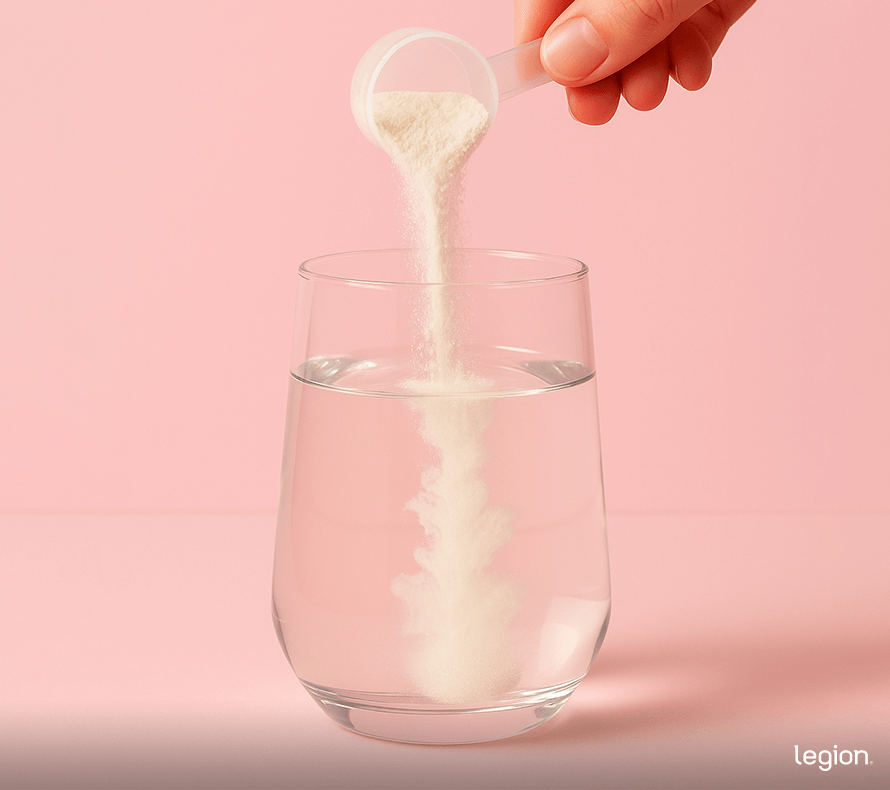
Collagen is the main structural protein in your physique’s connective tissues—the stuff that holds you collectively. It’s the first constructing block of your pores and skin, cartilage, bones, tendons, ligaments, and even components of your tooth.
The collagen utilized in collagen protein powders comes from the connective tissues of animals—often cows, chickens, or fish. Producers extract and course of these tissues to provide a superb, largely tasteless powder.
There are dozens of kinds of collagen, however essentially the most talked-about are:
- Sort I: Essentially the most plentiful kind, present in pores and skin, tendons, ligaments, and bone.
- Sort II: Concentrated in cartilage and essential for joint operate.
- Sort III: Present in pores and skin, lung tissue, and the vascular system.
Collagen protein powders usually include a mix of those sorts, however whatever the mix, the top product is similar: a powdered type of collagen derived from animal connective tissue.
Collagen Peptides vs. Collagen Protein Powder: What’s the Distinction?
The distinction between collagen peptides and collagen protein powder is how they’re processed:
- Collagen protein powder is simply powdered collagen.
- Collagen peptides are collagen that’s been hydrolyzed—damaged into smaller items (peptides) so it mixes simply and digests rapidly.
In apply, virtually each collagen complement in the marketplace right now is hydrolyzed collagen. So once you see “collagen peptides” on a label, you’re not a special sort of collagen—you’re a extra processed type of normal collagen protein powder.
Is Collagen a “Full” Protein?
No—collagen protein is just not “full.”
A whole protein is one which . . .
- Incorporates all 9 important amino acids that your physique can’t make by itself
- Supplies them in quantities that assist muscle progress, restore, and general well being
Examples of full proteins embrace meat, eggs, and protein powders like whey and casein.
Right here’s the everyday amino acid profile of a collagen protein complement:
Typical Amino Acid Profile of a Collagen Complement
| Amino Acid | Common Milligrams per Serving |
|---|---|
| Alanine | 1,139 mg |
| Arginine | 917 mg |
| Aspartic Acid | 610 mg |
| Cystine | 4 mg |
| Glutamic Acid | 1,270 mg |
| Glycine | 2,178 mg |
| Histidine†† | 86 mg |
| Hydroxyproline | 1,560 mg |
| Isoleucine†† | 138 mg |
| Leucine†† | 272 mg |
| Lysine†† | 396 mg |
| Methionine†† | 116 mg |
| Phenylalanine†† | 197 mg |
| Proline | 961 mg |
| Serine | 322 mg |
| Threonine†† | 302 mg |
| Tryptophan†† | 0 mg |
| Tyrosine | 35 mg |
| Valine†† | 252 mg |
†† Signifies important amino acids

As you may see, collagen protein is made largely of glycine, proline, hydroxyproline, alanine, and glutamic acid—amino acids which are non-essential from a dietary perspective and provides collagen a really completely different profile from high-quality, muscle-building proteins. It’s additionally notoriously low in leucine, the amino acid that kickstarts muscle protein synthesis. For reference:
In different phrases, collagen lacks the amino acid profile required to do the issues individuals usually take protein powder for . . .
Does Collagen Protein Construct Muscle?
No—collagen protein isn’t very efficient for constructing muscle.
As you simply realized, collagen isn’t a whole protein. It’s low in important amino acids and particularly low in leucine, the amino acid that flips the swap on muscle protein synthesis. That alone makes it a poor selection as your major muscle-building protein powder.
That mentioned, some analysis suggests collagen should still transfer the needle slightly—however solely in sure conditions, and nowhere close to as a lot as full proteins.
Latest Analysis on Collagen Protein and Muscle Development
A 2024 systematic review and meta-analysis printed in Sports activities Medication checked out 19 research on supplementing with collagen peptides alongside power coaching.
In comparison with a placebo, each day collagen peptides (often round 15 grams per day for no less than 8 weeks) led to:
- Small however significant will increase in fat-free mass (a proxy for muscle)
- Small enhancements in muscle power
- Some optimistic modifications in “muscle structure” (muscle construction)
Promising, sure—however there are essential caveats:
- Most individuals have been older, undermuscled, and infrequently undereating protein. In that scenario, including any additional 15 grams of protein plus lifting weights will often assist.
- The knowledge of the proof was largely low to average, so the findings aren’t ironclad.
- If you evaluate collagen to a high-quality protein like whey, collagen loses.
A study from Northern College of Paraná (UNOPAR), which wasn’t included in that meta-analysis, makes this final level clear.
The researchers break up eight males and three ladies into two teams:
- One took 35 grams of whey protein per day
- The opposite took 35 grams of collagen protein per day, spiked with additional leucine so each the whey and collagen dietary supplements offered 3 grams of leucine per serving
Each teams adopted the identical 10-week strength training program and ate round 0.7–0.9 grams of protein per pound of physique weight per day general.
If collagen have been “simply pretty much as good as whey when you add leucine,” each teams ought to have gained comparable quantities of muscle—however they didn’t.
- Quad measurement elevated 8.4% vs. 5.6% within the whey and collagen teams, respectively
- Biceps measurement elevated 10.1% vs. 6%, respectively
In different phrases, collagen’s drawback isn’t simply “not sufficient leucine” as a result of even once you repair the leucine subject, the general amino acid profile remains to be too poor to match whey for muscle progress.
Leucine helps begin the muscle-building course of, however you continue to want loads of the opposite important amino acids to truly construct new muscle tissue. Collagen simply doesn’t present them in the appropriate quantities.
The place Does That Go away Collagen for Muscle Development?
Right here’s a great way to consider it:
- Collagen protein can modestly assist will increase in muscle mass and power, particularly in older or undertrained individuals doing a structured train program.
- It’s nonetheless not a very good major protein supply for constructing muscle in comparison with wholefood sources like meat, eggs, and dairy, or protein powders like whey and casein.
What About Collagen Protein’s Different Advantages?
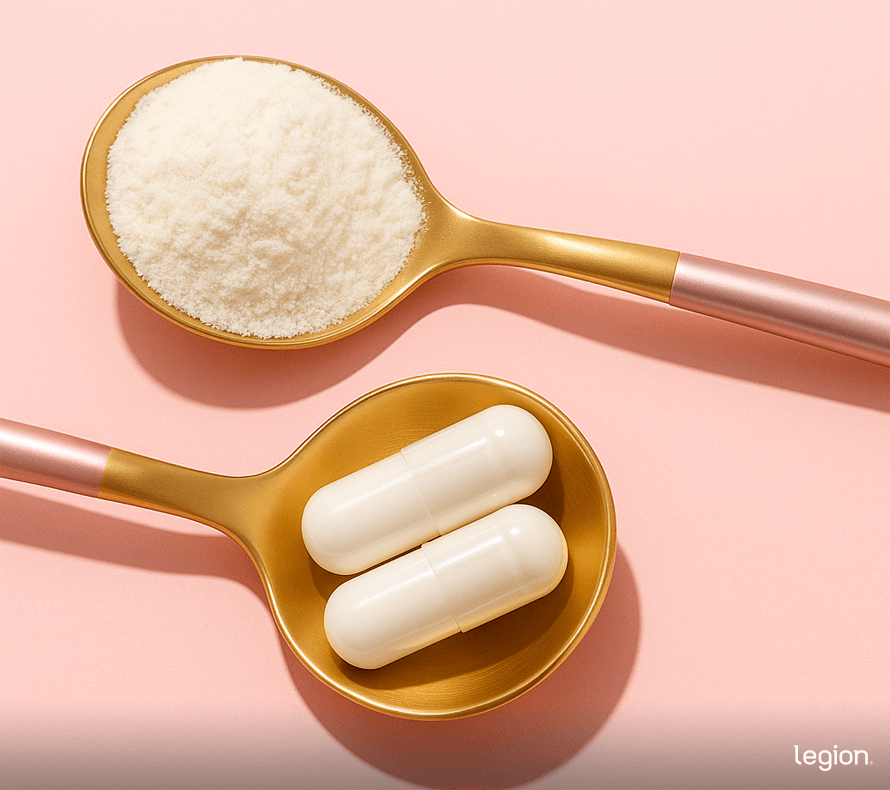
To this point we’ve largely talked about collagen protein powder as a muscle-building protein supply—and on that entrance, it’s nonetheless awful in comparison with whey and casein.
The place it begins to look extra promising is as a collagen-support complement: there’s rising proof that correctly dosed collagen peptides might assist collagen synthesis, connective tissue and joint well being, restoration, pores and skin, and even cardiovascular well being markers.
Collagen Synthesis
Collagen synthesis is your physique’s course of of creating new collagen for tendons, ligaments, cartilage, and different connective tissues.
Latest research shows that taking collagen peptides—often round 15 grams per day—can enhance the physique’s manufacturing of collagen, particularly once you take it with slightly vitamin C and pair it with train.
For instance, one study discovered that resistance coaching alone didn’t increase collagen manufacturing in middle-aged lifters. However when the individuals took collagen earlier than coaching, their collagen-building response noticeably elevated.
In easy phrases: in case you take the correct quantity of collagen peptides earlier than train, your physique appears to make extra collagen afterward. And over time, which will assist assist stronger, more healthy connective tissues.
Connective Tissue Well being
Outcomes from the 2024 Sports activities Medication meta-analysis confirmed that long-term supplementation with collagen was linked to enhancements in tendon morphology (how wholesome and sturdy the tendon seems to be on imaging) and muscle–tendon construction general.
That mentioned, the authors rated the understanding of this proof as very low, primarily as a result of there weren’t many high-quality tendon research and the individuals diversified loads (age, coaching expertise, protocols).
So the fairest takeaway is that this: collagen peptides might assist more healthy, better-adapted tendons over time, particularly once you’re coaching commonly—however the knowledge are nonetheless early, not definitive.
Joint Well being
A 2025 systematic review and meta-analysis of 11 research with greater than 800 individuals discovered that collagen supplementation led to vital enhancements in ache and bodily operate in these with knee osteoarthritis signs.
In different phrases, for individuals with cranky, arthritic knees, taking collagen commonly appeared to assist them harm much less and transfer extra simply.
Restoration After Train
Collagen protein might also increase restoration. In a 3-week study, school athletes lifted weights and took both collagen with vitamin C or a placebo.
Each teams noticed their explosiveness drop at first, however solely the collagen group acquired again to baseline by the top of the examine. In addition they improved how powerfully they might decelerate and re-accelerate in a bounce check, whereas the placebo group didn’t.
In one other study, sedentary individuals did a brutal drop-jump exercise to trigger muscle harm. These taking collagen regained power, explosiveness, and bounce top quicker over the next 48 hours than these taking a placebo.
Other studies present collagen might alleviate muscle soreness after train to a small diploma, too.
Pores and skin Well being
Pores and skin is generally manufactured from collagen, so it is sensible individuals take collagen dietary supplements to assist it appear and feel higher. And right here, the analysis is encouraging.
A big meta-analysis of 19 randomized trials with over 1,000 individuals discovered that taking hydrolyzed collagen for 8–12 weeks improved pores and skin hydration, elasticity, and wrinkle depth in comparison with a placebo.
One other review got here to an identical conclusion: hydrolyzed collagen appears to modestly cut back seen indicators of pores and skin ageing over time.
So whereas it’s not a magic eraser for wrinkles, collagen peptides do appear to offer pores and skin a small however actual increase in moisture, firmness, and smoothness when taken persistently.
Cardiovascular Well being
Collagen peptides might also nudge a number of heart-health markers in the appropriate route, however the results are small.
A 2023 systematic review and meta-analysis of 12 research discovered that taking collagen peptides barely decreased LDL (“unhealthy”) ldl cholesterol, lowered systolic blood strain by ~5 mmHg, decreased fats mass, and elevated fat-free mass.
That mentioned, the proof high quality ranged from excessive to very low relying on the marker, and outcomes diversified loads between research, so that is extra of a modest bonus than a miracle repair.
Does Whey Protein Have Collagen?
No—whey protein doesn’t naturally include collagen. They’re fully completely different proteins: whey comes from milk, and collagen comes from the connective tissues of animals. So in case you see a whey protein that incorporates collagen, it’s as a result of the corporate added it on objective.
Some manufacturers combine whey and collagen and market the combo as an “all-around restoration” complement. The thought is easy: whey helps muscle constructing, and collagen might assist your joints and connective tissues. That pitch isn’t unreasonable.
However not each firm consists of collagen for the appropriate causes.
As a result of collagen is reasonable and nonetheless counts as “protein” on a diet label, some manufacturers use it to inflate the protein quantity with out making the product any higher for constructing muscle. This can be a widespread trick within the complement business, and it’s one thing you need to look ahead to when selecting a protein powder.
To grasp how this works—and keep away from getting misled—try this text:
The Backside Line on Collagen Protein Powder and Collagen Peptides
Collagen protein remains to be a poor muscle-building protein—it’s incomplete, low in important amino acids, and nowhere close to as efficient as whey or casein.
However collagen peptides are not the complement business’s punchline.
Newer analysis exhibits that pairing collagen peptides with common coaching can:
- Enhance collagen synthesis
- Assist more healthy tendons and connective tissue
- Enhance joint consolation and performance—particularly in individuals with achy or arthritic knees
- Modestly improve restoration after laborious exercises
- Enhance pores and skin hydration, elasticity, and smoothness
- Barely enhance a number of cardiovascular markers
These aren’t magic, in a single day modifications—however they’re actual, measurable advantages.
FAQ #1: Is protein powder with collagen good for you?
Sure—in case you’re taking it for the appropriate causes. Collagen protein powder isn’t good for constructing muscle, so it shouldn’t substitute whey or casein. However collagen peptides can assist collagen synthesis, joint consolation, tendon well being, restoration, and even pores and skin hydration once you take round 15 grams per day persistently.
FAQ #2: Is it protected to drink collagen on daily basis?
For most individuals, sure—collagen peptides are thought-about very protected for each day use. The principle exception is in case you’re allergic to the supply of the collagen (for instance, fish-based collagen). And as all the time, in case you have a medical situation or any considerations, test together with your physician earlier than taking a brand new complement.
FAQ #3: Which is best, collagen protein or whey protein?
For constructing muscle, whey wins by a mile. Whey is a whole, high-quality protein wealthy in important amino acids and leucine—the important thing driver of muscle protein synthesis.

Collagen is low in these amino acids, so it merely can’t compete for muscle progress. The place collagen is superior is connective-tissue assist, joint consolation, and pores and skin well being.
Need Extra Content material Like This?
Try these articles:
Scientific References +
- Zdzieblik, D., Oesser, S., Baumstark, M. W., Gollhofer, A., & König, D. (2015). Collagen peptide supplementation in combination with resistance training improves body composition and increases muscle strength in elderly sarcopenic men: A randomised controlled trial. British Journal of Nutrition, 114(8), 1237–1245. https://doi.org/10.1017/S0007114515002810
- Shoulders, M. D., & Raines, R. T. (2009). Collagen Structure and Stability. Annual Review of Biochemistry, 78(1), 929–958. https://doi.org/10.1146/annurev.biochem.77.032207.120833
- Gauza-Włodarczyk, Marlena, et al. “Amino Acid Composition in Determination of Collagen Origin and Assessment of Physical Factors Effects.” International Journal of Biological Macromolecules, vol. 104, no. Pt A, 1 Nov. 2017, pp. 987–991, pubmed.ncbi.nlm.nih.gov/28687386/, https://doi.org/10.1016/j.ijbiomac.2017.07.013. Accessed 12 Jan. 2022.
- Zdzieblik, Denise, et al. “Collagen Peptide Supplementation in Combination with Resistance Training Improves Body Composition and Increases Muscle Strength in Elderly Sarcopenic Men: A Randomised Controlled Trial.” British Journal of Nutrition, vol. 114, no. 8, 10 Sept. 2015, pp. 1237–1245, https://doi.org/10.1017/s0007114515002810. Accessed 12 Oct. 2019.
- Greenwood, D.A., et al. “AMINO ACID COMPOSITION of FRESH and COOKED BEEF CUTS.” Journal of Biological Chemistry, vol. 193, no. 1, Nov. 1951, pp. 23–28, https://doi.org/10.1016/s0021-9258(19)52423-1. Accessed 1 May 2021.
- Hamarsland, Håvard, et al. “Native Whey Protein with High Levels of Leucine Results in Similar Post-Exercise Muscular Anabolic Responses as Regular Whey Protein: A Randomized Controlled Trial.” Journal of the International Society of Sports Nutrition, vol. 14, 21 Nov. 2017, www.ncbi.nlm.nih.gov/pmc/articles/PMC5697397/, https://doi.org/10.1186/s12970-017-0202-y.
- Bischof, Kevin, et al. “Impact of Collagen Peptide Supplementation in Combination with Long-Term Physical Training on Strength, Musculotendinous Remodeling, Functional Recovery, and Body Composition in Healthy Adults: A Systematic Review with Meta-Analysis.” Sports Medicine, 26 July 2024, https://doi.org/10.1007/s40279-024-02079-0. Accessed 20 Oct. 2024.
- Jacinto, Jeferson L., et al. “Whey Protein Supplementation Is Superior to Leucine-Matched Collagen Peptides to Increase Muscle Thickness during a 10-Week Resistance Training Program in Untrained Young Adults.” International Journal of Sport Nutrition and Exercise Metabolism, 2022, pp. 1–11, https://doi.org/10.1123/ijsnem.2021-0265. Accessed 20 Mar. 2022.
- Lee, Joonsung, et al. “Collagen Supplementation Augments Changes in Patellar Tendon Properties in Female Soccer Players.” Frontiers in Physiology, vol. 14, 26 Jan. 2023, www.ncbi.nlm.nih.gov/pmc/articles/PMC9910607/, https://doi.org/10.3389/fphys.2023.1089971. Accessed 17 Apr. 2023.
- Balshaw, Thomas G, et al. “The Effect of Specific Bioactive Collagen Peptides on Tendon Remodelling during 15 Weeks of Lower Body Resistance Training.” Medicine and Science in Sports and Exercise, vol. 55, no. 11, 5 July 2023, pp. 2083–2095, https://doi.org/10.1249/mss.0000000000003242.
- Nulty, Christopher D, et al. “Hydrolyzed Collagen Supplementation prior to Resistance Exercise Augments Collagen Synthesis in a Dose-Response Manner in Resistance-Trained, Middle-Aged Men.” AJP Endocrinology and Metabolism, 11 Sept. 2024, https://doi.org/10.1152/ajpendo.00252.2024. Accessed 8 Dec. 2024.
- Simental-Mendía, Mario, et al. “Effect of Collagen Supplementation on Knee Osteoarthritis: An Updated Systematic Review and Meta-Analysis of Randomised Controlled Trials.” Clinical and Experimental Rheumatology, 5 Mar. 2024, https://doi.org/10.55563/clinexprheumatol/kflfr5.
- Lis, Dana M., et al. “Collagen and Vitamin c Supplementation Increases Lower Limb Rate of Force Development.” International Journal of Sport Nutrition and Exercise Metabolism, vol. 32, no. 2, 1 Mar. 2022, pp. 65–73, https://doi.org/10.1123/ijsnem.2020-0313.
- Bischof, Kevin, et al. “Influence of Specific Collagen Peptides and 12-Week Concurrent Training on Recovery-Related Biomechanical Characteristics Following Exercise-Induced Muscle Damage—a Randomized Controlled Trial.” Frontiers in Nutrition, vol. 10, 16 Nov. 2023, p. 1266056, www.ncbi.nlm.nih.gov/pmc/articles/PMC10687431/, https://doi.org/10.3389/fnut.2023.1266056. Accessed 25 Jan. 2024.
- Clifford, Tom, et al. “The Effects of Collagen Peptides on Muscle Damage, Inflammation and Bone Turnover Following Exercise: A Randomized, Controlled Trial.” Amino Acids, vol. 51, no. 4, 19 Feb. 2019, pp. 691–704, https://doi.org/10.1007/s00726-019-02706-5. Accessed 8 Aug. 2020.
- Kumiko Kuwaba, et al. Dietary Collagen Peptides Alleviate Exercise-Induced Muscle Soreness in Healthy Middle-Aged Males: A Randomized Double-Blinded Crossover Clinical Trial. Vol. 20, no. 1, 3 May 2023, www.ncbi.nlm.nih.gov/pmc/articles/PMC10158542/, https://doi.org/10.1080/15502783.2023.2206392. Accessed 11 July 2023.
- Miranda, Roseane B., et al. “Effects of Hydrolyzed Collagen Supplementation on Skin Aging: A Systematic Review and Meta‐Analysis.” International Journal of Dermatology, vol. 60, no. 12, 20 Mar. 2021, https://doi.org/10.1111/ijd.15518.
- Andriani, Dian, et al. “Exploring the Impact of Hydrolyzed Collagen Oral Supplementation on Skin Rejuvenation: A Systematic Review and Meta-Analysis.” Curēus, 9 Dec. 2023, www.ncbi.nlm.nih.gov/pmc/articles/PMC10773595/, https://doi.org/10.7759/cureus.50231. Accessed 12 Apr. 2024.
- Jalili, Zahra, et al. “Effects of Collagen Peptide Supplementation on Cardiovascular Markers: A Systematic Review and Meta-Analysis of Randomized, Placebo-Controlled Trials.” British Journal of Nutrition, 6 June 2022, pp. 1–43, https://doi.org/10.1017/s0007114522001301. Accessed 14 June 2022.
- Thorben Aussieker, et al. “Ingestion of a Whey plus Collagen Protein Blend Increases Myofibrillar and Muscle Connective Protein Synthesis Rates.” Medicine & Science in Sports & Exercise, 6 Nov. 2024, journals.lww.com/acsm-msse/abstract/9900/ingestion_of_a_whey_plus_collagen_protein_blend.655.aspx, https://doi.org/10.1249/mss.0000000000003596. Accessed 9 Nov. 2024.